

In the slideshow about the new Netgear routers introduced at CES 2008, I noted that the "metamaterial" antennas in the WNDR3300 and WNR3500 didn’t look unusual at all. But during my visit to Netgear’s booth, I met with Rayspan President and CEO Franz Birkner and Gregory Poilasne, V.P of Business Development, who got me better acquainted with the technology.
Rayspan is the company that designed the metamaterial antenna systems for these products and specializes in "air interface" solutions for wireless communications systems. Their products typically take the form of CAD files that are used to etch printed circuit board patterns.
I learned that metamaterials aren’t exotic materials at all, but instead are artificial composite materials engineered to produce a desired electromagnetic behavior with significantly enhanced performance over "natural" structures.
Metamaterials are much smaller than the wavelength of the electromagnetic waves propagating through the material, typically on the order of 1/10th the wavelength’s size. The metamaterial antennas in Netgear’s new products are made from unaltered FR-4 printed circuit board material and copper etch, which explains why they didn’t look exotic or unusual in the slideshow photos.
One key to metamaterials’ magic is that they have a negative index of refraction. Simply put, metamaterial antennas can bend RF waves more than normal antennas, which results in a much smaller antenna. There is plenty of physics to back this up, but thankfully Franz and Gregory spared me from the details!
The easiest way to see what Netgear’s metamaterial antennas bring to the party is to compare board designs using conventional and metamaterial antenna designs.
Figure 1 shows the top of Netgear’s WPN824 original RangeMax router [reviewed]. This is a single band 802.11 b/g router using smart antenna technology sourced from Video54 (now Ruckus Wireless). You can see the seven antennas and how much board space they occupy.
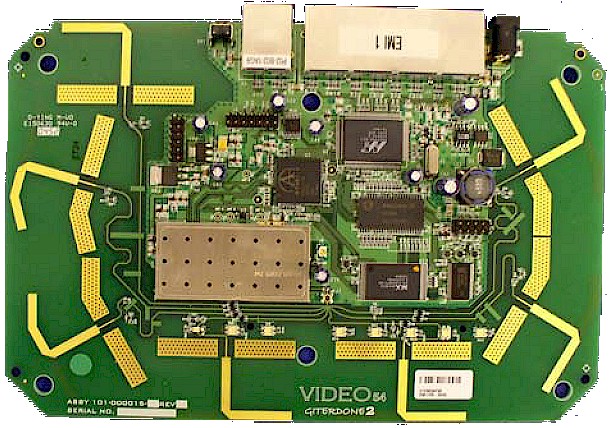
Figure 1: Netgear WPN824 original RangeMax router board top
In contrast, Figure 2 shows the top of the just-introduced WNDR3300. This is a dual-band design with 802.11b/g and draft 802.11n dual-band radios. Although it’s not clear from the photos, the boards are the same size.
You can see the eight antennas located around the periphery of the board. Note their size relative to the WNR824’s antennas and how much less board area they occupy.
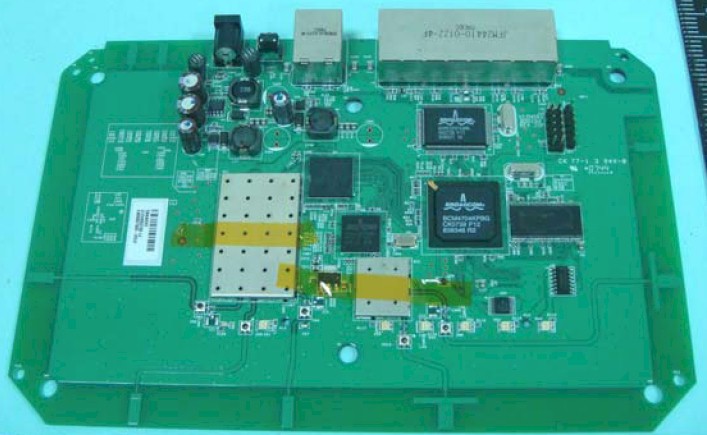
Figure 2: Netgear WNDR3300 RangeMax Dual Band Wireless-N Router board top
What you can’t see is the high isolation also provided by metamaterial antennas. This means that, for example, when the two radios in the WNDR3300 are running simultaneously, there will be less interference between them than if the radios were connected to the conventional dipoles used on most routers.
And that’s the story of metamaterial antennas in a nutshell. Better performance (up to 15% better according to Rayspan), while taking up much less board space, plus high isolation. In addition to improving router and APs, metamaterials will really help to put better antennas into wireless clients.