

In my recent review of the Linksys WRT110, I noted that it is really a draft 802.11n router in disguise. I based this conclusion on the fact that Ralink obtained Wi-Fi Certification for a "RT2700 Reference Design" (Figure 1).
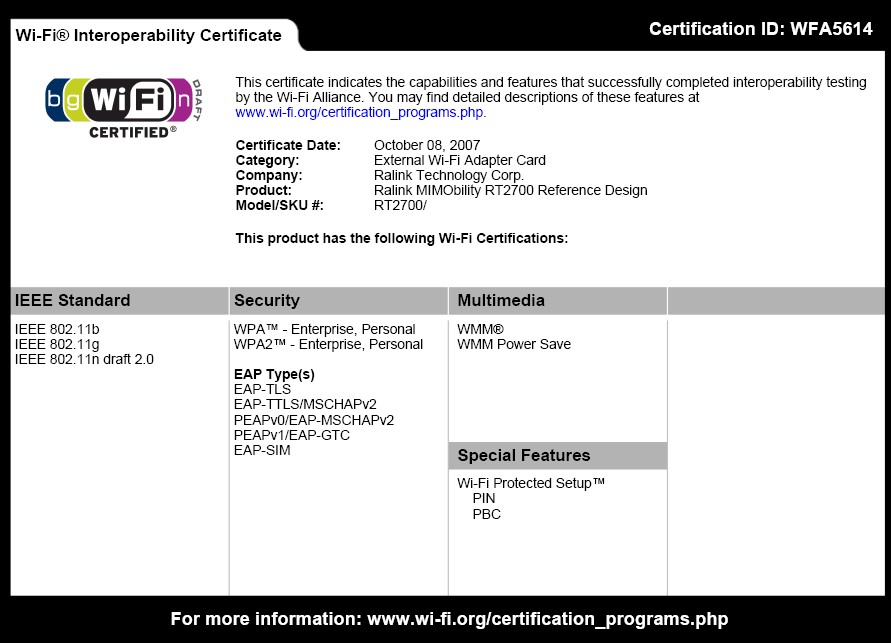
Figure 1: Ralink RT2700 Reference Design WFA Certificate
Although I didn’t have the specs of the reference design, the RT2700 family datasheet showed that all members of the RT2700 product family used a radio with a 1T2R (one transmit, two receive) architecture.
Since the 2.4 GHz RT2720 transceiver chip was used in the WRT110, I chided Linksys for not identifying the WRT110 as a draft 11n product, instead of resurrecting the "MIMO" moniker commonly used in those dark days before draft 802.11n.
After the review was posted, Linksys told me that the reason they didn’t pursue Wi-Fi certification for the WRT110 was because it wasn’t certifiable under Alliance rules since, it had only one transmit stream. Since it seemed odd to me that a 1T client device (STA) could be certified, but an access point / wireless router (AP) could not, I followed up with the Alliance for confirmation.
The Alliance quickly confirmed what Linksys had told me, referring me to this document, from which I have extracted Figure 2.
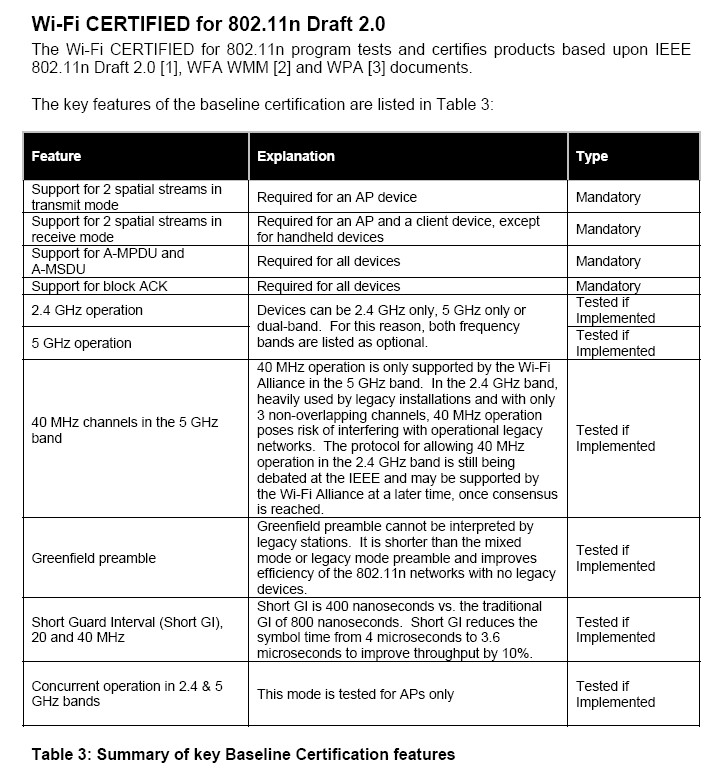
Figure 2: Draft 802.11n Wi-Fi Certification Features
The first two lines are the interesting ones. The first "feature" (support for 2 spatial streams in transmit mode) blocks a 1T STA from WFA 11n Draft 2.0 Certification by omission. The Alliance spokesperson said the reasoning behind this was "station devices don’t require the same sort of coverage as access points, so only 1 transmit stream is required for station certification".
I find this a bit odd, since both AP and STA must be able to "hear" each other in order to set up and maintain a link. But perhaps the 1T allowance for STAs is because APs can have better antennas than STA devices, due to their larger physical size.
But the second "feature" is even more interesting, because it opens a loophole for "handheld" devices, essentially allowing them to be 1T1R / not MIMO, i.e. like 802.11a, b and g.
So, in the Wi-Fi Alliance’s eyes, MIMO, i.e. multiple transmit channels (and even multiple receive channels), is not part what makes up at least some draft 802.11n devices.