

Introduction
For an updated view of powerline vs. 802.11n HD streaming performance see HD Streaming Smackdown: The Rematch.
I am fortunate enough to have designed the network layout for my recently-built home. (That story starts here.) As a result, I have Ethernet drops where I need them, including where my NAS and home entertainment gear sit. So I have plenty of steady, reliable bandwidth to ensure trouble-free streaming of even high-definition video.
But not everyone has Ethernet where they need or want it and either can’t or are reluctant to bite the bullet and pull CAT5e/6 to solve the problem. Consumer networking companies know this, of course, and have been trying for years to convince us to buy a parade of "alternative" (to Ethernet) networking products instead of calling our friendly neighborhood electrician or network installer.
So I set out to see if I had anything in my pile o’ reviewed products that could provide trouble-free streaming of high definition video over a not-too-difficult distance.
What does HD Need?
We first need to see what we need for bandwidth before we can choose an Ethernet alternative. For HD, you frequently hear 20 Mbps or thereabouts described as the required bandwidth. This gets us in the proper ballpark, but doesn’t paint a complete picture.
Look at Figure 1 to get a better idea of what you really need to support HD streams. I used ReadError’s NetMeter (free) to plot throughput profiles of a couple of 720p HD clips downloaded from Apple’s HD Trailer website. (There is also Hoo Technologies’ Net Meter if you like something with more plotting options and don’t mind paying $20.)
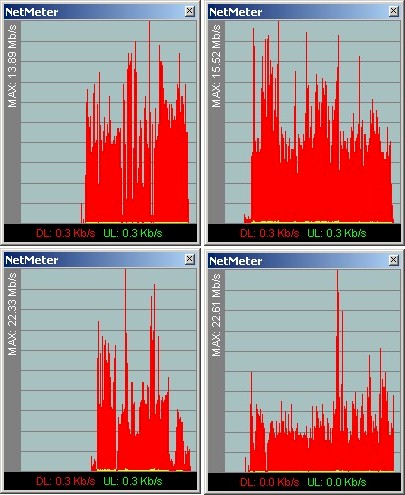
Figure 1: 720p HD bandwidth profiles
The vertical scaling on the plots isn’t the same, but the maximum throughput number in the left-hand margin on each plot will help you interpret the results.
Even though Quicktime HD’s H.264 encoding is pretty efficient, you can see that peak bandwidths still get up above 20 Mbps. And if you want to properly support fast-forward and reverse, you could see those peak numbers almost double.
By the way, I didn’t use 1080p clips because the Netgear EVA8000 [reviewed] that I used for playback on my Panasonic TH-50PX75U Plasma wouldn’t properly play Quicktime HD 1080p clips. (Netgear specs WMV up to 1080p, but doesn’t say anything about H.264 or Quicktime HD.) I also found that the EVA8000 would stutter and grind to a halt on some 720p QTHD 720p trailers. So I first verified that all the clips used for testing played properly with an 100 Mbps Ethernet connection.
What can we use?
Given the throughput requirements of the 720p test clips, I decided to start with plenty of headroom and try 200 Mbps powerline and draft 11n wireless. Both of these Ethernet alternatives boldly advertise throughput numbers in the 100’s of Mbps—actually 200Mbps and 300Mbps respectively—and are frequently touted as solutions for HD streaming. Of course, those are the maximum raw PHY rates before little things like protocols, error correction and security are included, which reduce throughput by at least 50% from the "maximum" numbers.
Figure 2 is taken from our Zyxel PLA-400 review and shows a summary of throughput tests in vie of my home’s test locations. Location 3 is the one of interest, which is my living room. This spot is one floor above the office / lab, approximately 25 feet away (direct path). There is one wood floor, a sheetrock ceiling and no walls between the two locations. This isn’t the most extreme test case that I could use. But I think that it may be typical of the distances and obstacles many Ethernet-less would-be HD streamers face.
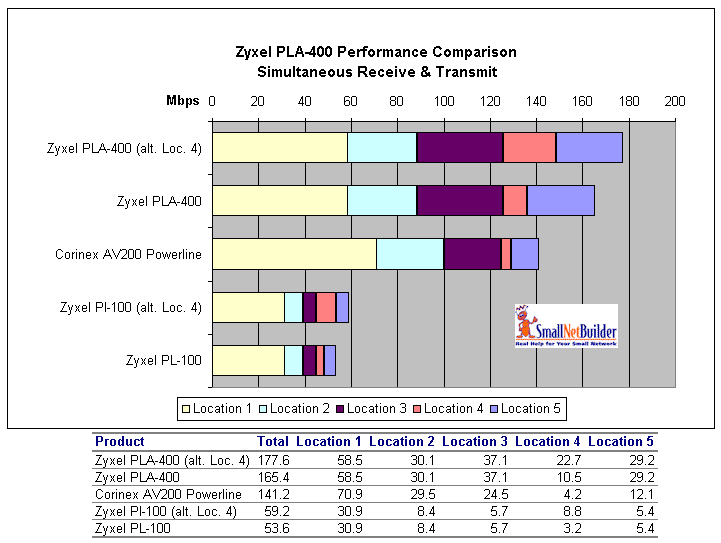

Figure 2: Powerline networking test summary
The chart also includes results for the Corinex AV200 powerline product [reviewed], which is based on DS2’s 200 Mbps powerline technology. HomePlug AV and DS2’s UPA (Universal Powerline Association) technology are roughly equivalent in performance, but not interoperable. The chart shows that either technology produced around 30 Mbps at the test location. This is a bit tighter than I would like it to be to handle streaming throughput peaks. But I decided to give it a shot anyway.
For draft 11n, I decided to use 5 GHz instead of 2.4, simply because the 2.4 GHz spectrum is just too crowded to use for reliable HD streaming. Even though 5 GHz has significantly smaller range than 2.4 GHz, my previous tests of draft 11n products showed that the signal strength in Location 3 (with the test AP in the lab / office / Location 1) was high enough to product sufficient throughput.
Powerline
I had long ago returned the Zyxel PLA-400, so turned to my closet to see what 200 Mbps powerline products lurked there. I found the Linksys PLK200 PowerLine AV Ethernet Adapter Kit, which I had never gotten around to reviewing. I also had the NETGEAR HDXB101 Powerline HD Network Kit, which was in a similar boat.
As is all too common, the desires of marketing people win out over not confusing potential customers. So it’s not easy to tell which product supports which powerline technology. (The Linksys product uses HomePlug AV, while the Netgear uses DS2’s 200 Mbps technology.)
I initially just plugged one of the PLE200 adapters from the PLK200 kit into a power outlet in my lab and the other into an outlet behind my TV and other media gear in my living room and expected flawless streaming. But when I saw the trailer clip quickly lose sync, then grind to a halt, I did the testing that I should have done in the first place.
Figure 3 tells the disappointing tale. The top trace was taken with two PLE200 adapters plugged into outlets in my lab. From previous testing, I knew that light dimmers could knock down powerline networking throughput. So at 20 seconds into the run, I flipped on a light plugged into a dimmer, plugged into a third outlet in the same room, then turned it off at the 40 second mark. You can see a 10-20% drop in throughput from the noise generated by the dimmer.
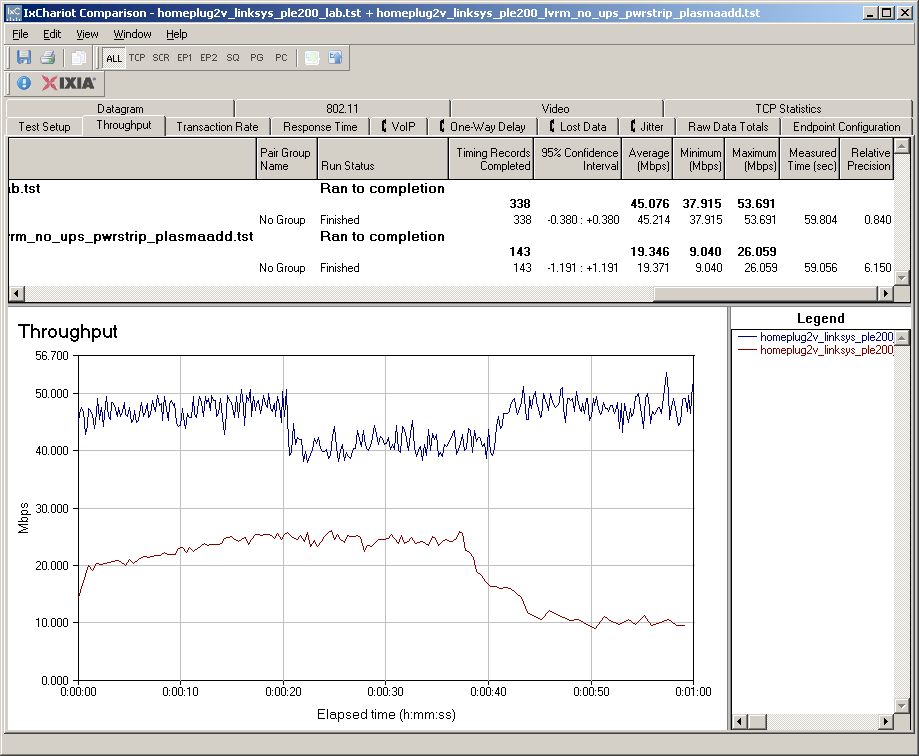
Figure 3: Linksys PLK200 throughput tests
The bottom trace is a run taken with one adapter plugged into a lab outlet and the other into a living room outlet. You can see a slow climb in throughput as the adaptive bandwidth algorithms in the PLE200’s firmware try to find the right combination of frequency bands to use. But when I turned on my Panasonic plasma shortly before the 40 second mark, throughput took a dive down to an unusable 10 Mbps as soon as the screen lit up. Even though no light dimmers were around, it looks like the Linksys adapters didn’t like the line noise coming out of the Panasonic set.
I then tried a quick same-room test on the Netgear powerline adapter set. But despite upgrading to the latest firmware, I was never able to achieve anything higher than around 3 Mbps of throughput. Since I know that DS2’s 200 Mbps technology can do much better than that, I assumed the Netgear adapters were broken and set them aside.
Draft 11n Wireless
For my 5 GHz draft 11n wireless test, I pulled out the Netgear WNHDE111 [reviewed]. It fit the bill for what I needed and, from my previous testing, I knew that this product had very high throughput. The downside is that 5 GHz draft 11n doesn’t have great range, especially when used in the 40 MHz bandwidth mode. But my previous testing showed plenty of throughput in the spot where I was using it.
Figure 4 compares the WNHDE111 and another draft 11n wireless bridge product, the D-Link DAP-1522 [reviewed]. Both products have similar range, i.e. don’t reach my farther three test locations. But the WNHDE111 has over twice the throughput at Location C (which is the same as Location 3).
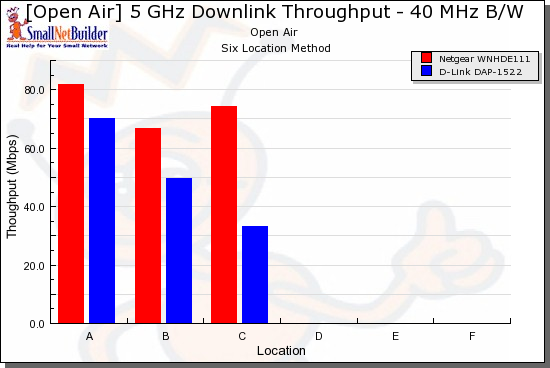
Figure 4: 5 GHz downlink throughput comparison
The tested throughput indicated that I should have had trouble-free streaming, and that was almost the case. I ran through my collection of test clips and only occasionially saw the audio and video temporarily lose sync.
Figure 5 shows the reason for the occasional problems and points out the problem with even 5 GHz draft 11n.
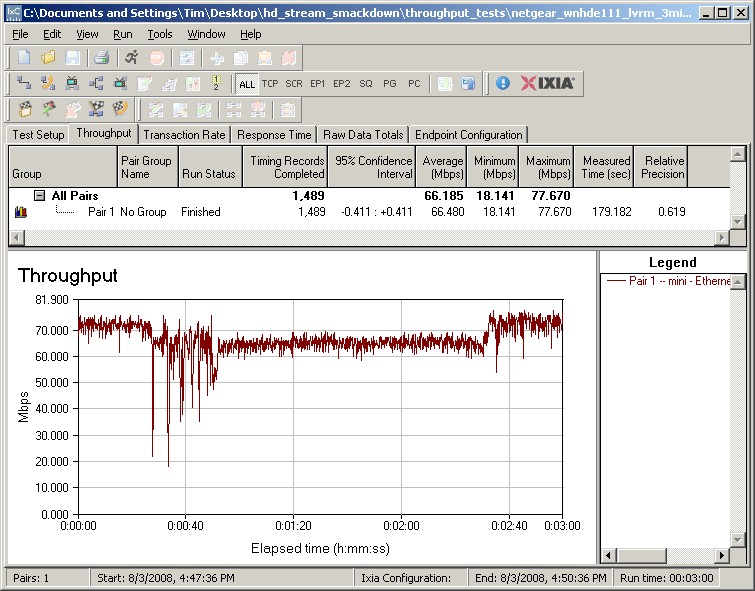
Figure 5: WNHDE111 throughput – 3 minutes
Even though average throughput is around 3X what’s needed to play most of my test clips, you can see some flailing around between 30 and 50 seconds into the run. This certainly isn’t from any interference sources, since my environment is clear of even 2.4 GHz neighbors. And I even recently dumped my 5.8 GHz cordless phones (which also used the 2.4 GHz band) in favor of WLAN interference-free DECT 6.0 phones.
Instead, the throughput drops are probably due to ranging or other algorithms that are part of the WNHDE111’s design. I should note that I ran other extended tests and saw similar glitches, although they didn’t last as long or drop as low. But as I found in Video Streaming Need To Know: Part 1- Encoding, Bit Rates and Errors, it takes packet loss as little as only 0.05% to introduce visible problems in standard definition video streams.
Conclusion
I was surprised that draft 11n wireless did as well as it did and that powerline did so poorly. But the Netgear solution won’t solve everyone’s wireless HD streaming problems. It just happened that the product’s range and my requirements matched nicely to provide high enough throughput (if you ignore the occasional glitches). In your home, they might not.
The bottom line is that the best solution for trouble-free HD streaming is still good ol’ Ethernet. There’s just no alternative yet that can beat it for delivering reliable, glitch-free bandwidth no matter where you need it.