

The Pitch and Product
| Hawking Broadband Booster | |
|---|---|
| Summary | Upstream QoS device based on Ubicom’s StreamEngine technology. Very limited configuration control and operation feedback. Similar to D-Link DI-102 |
| Update | None |
| Pros | • Plug-and-go setup • Very effective for VoIP prioritization |
| Cons | • No quantitative user feedback • Costs more than some routers • Use with integrated-modem DSL routers requires additional hardware |
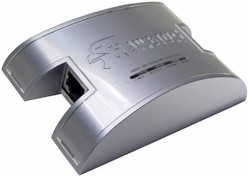
You’re going to be hearing more about QoS (Quality of Service) in the coming months. It seems that someone has realized that all the whizzy applications such as VoIP, online gaming with voice, web conferencing, etc. sometimes provide a less-than-satisfactory user experience with the puny upstream bandwidth eked out to us by most broadband ISPs.
Some consumer networking product manufacturers have been responding to this need by adding QoS features to their routers. Linksys has actually been quietly adding QoS features for sometime, most likely in response to these features’ availability in open source distros like Sveasoft and OpenWRT. Although these QoS controls are more general purpose than those provided by the HBB1, they require some knowledge on the user’s part (or experimentation) to use and are relatively unsophisticated in the way they work.
Hawking has taken a different approach with the HBB1, both in form and function. They’ve made it a small standalone box designed to connect between a router and broadband modem (Figure 1).
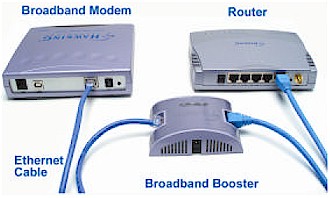
Figure 1: Connecting the HBB1
Hawking has also narrowed the focus of the HBB1 to improving the performance of “time-sensitive” applications for uplink – from your computer to the Internet – data only. Its target applications are things like reducing gaming “lag”, preventing VoIP calls from being degraded (at least for your voice) by data traffic and preventing file-sharing applications from interfering with other real-time applications.
Unlike other more general QoS approaches, the HBB1 won’t do anything for downlink traffic and can’t differentiate among users. So if you’re looking for something to limit the bandwidth a specific application or person can use, the HBB1 isn’t for you.
The Product, Continued
The “secret sauce” that makes the HBB1 tick is a technology called StreamEngine from communications processor maker Ubicom. StreamEngine uses a patent-pending algorithm (“Intelligent Stream Handling”) that Ubicom says automatically manages the flow of traffic going to the Internet, without the need for user configuration.
The blurb on Ubicom’s site also says Intelligent Stream Handling “minimizes the impact of large-packet, lower priority traffic on latency-sensitive traffic and eliminates delays caused by DSL or cable modem connections”. Put into simple terms, StreamEngine examines and classifies data flowing through it, and speeds packets from real-time-sensitive applications (VoIP, gaming) on their way ahead of data that doesn’t care much about when or in what order it arrives at its destination (FTP, Email).
D-Link actually incorporated an earlier version of StreamEngine into its DGL-4100 and 4300 gaming routers [reviewed here], but provided both controls to tune the way StreamEngine worked and user-accessible information about how it identified and prioritized traffic flowing through it. The company will soon be releasing an HBB1 competitor, the DI-102 Broadband Internet / VoIP Accelerator, but it looks to be as black boxish as the HBB1.
The heart of the HBB1 is a Ubicom IP3020 Network processor, which is an 8-way multi-threaded 32 bit processor clocked at 250MHz. Figure 2 also shows that flash memory and two Davicom DM9161A 10/100 Ethernet tranceivers are about all that there is to the hardware.
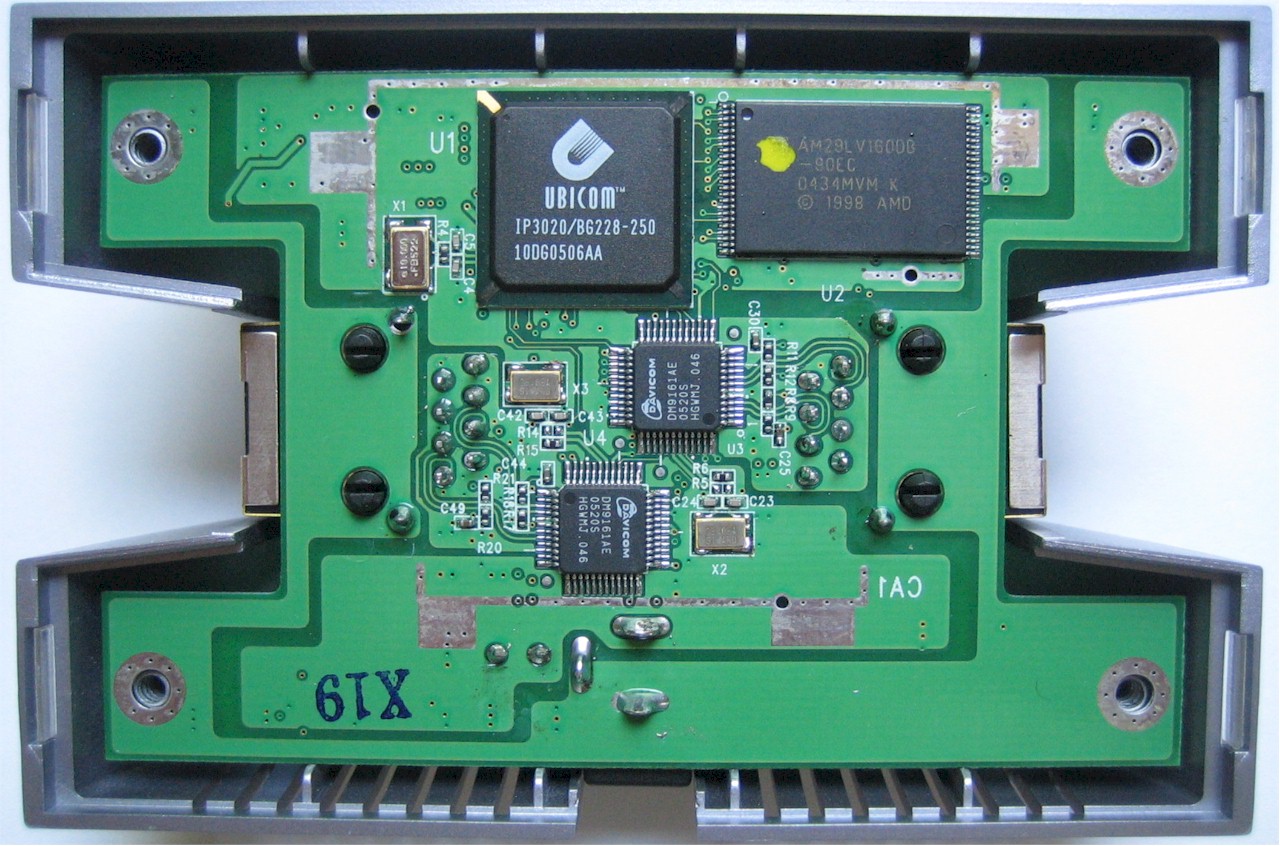
Figure 2: HBB1 board
(click on image to enlarge)
Hawking has taken a “black box” approach with the HBB1, exposing very few controls and providing only a blinking LED and single “Information” page to assure you that it is working. Two nice touches worthy of note is the weighted base that’s intended to help keep the HBB1 from sliding off your desk under the weight of its two Ethernet and one power cables and the short power extension cable that keeps the largish power wart from taking up more than one position on your outlet strip.
The Test
Since my Internet comes through a Westell wireless DSL router with integrated modem, I connected the HBB1’s Internet jack to a port on the Westell’s built-in switch and the Router port to an uplink port on my LAN’s switch where I have everything connected. (I’m surprised this setup isn’t covered in the HBB1’s printed User Guide, since integrated DSL modem / routers are pretty common.)
After I powered it up, I waited about 5 – 10 seconds for the blinking light show from its front panel LEDs to settle down and logged into the admin server statically located at 192.168.229.61. You don’t have to worry about changing the IP address of the computer you use to contact the HBB1 or changing its IP address to match your network’s, since the HBB1 takes care of any necessary address mapping.
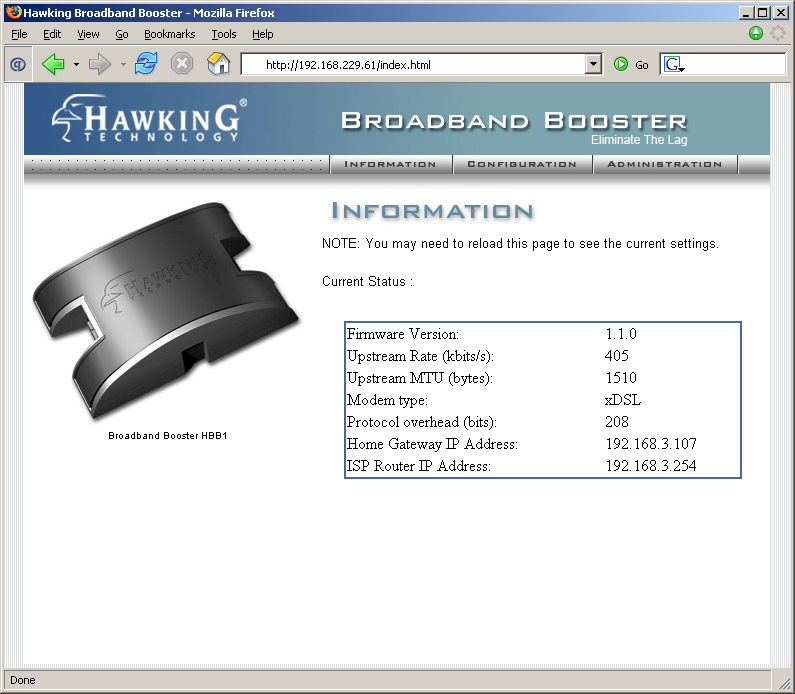
Figure 3: Information page
(click on image to enlarge)
The Information page (Figure 3) showed that the HBB1 had correctly identified my modem type and automatically figured out my upstream rate, MTU (Maximum Transmission Unit), router and gateway IP addresses. I should note that it actually took some fiddling, reboots and power cycling before the HBB1 properly set itself up. Hawking said they had seen this behavior in pre-release hardware, which it appeared that I received. They also said that the problem was fixed in released product that should be hitting the shelves in a week or two.
At any rate, my testing showed that if these parameters aren’t set correctly, the HBB1 won’t do a proper job of managing contention for your upstream bandwidth. So it’s a good idea to log in and check them to see if they make sense for your setup. If they’re not correct, you can manually enter the Upstream Data Rate, Connection Type and ISP Gateway address via the Configuration page. But since the automatic setup also detects MTU and protocol overhead, I think it’s best to let it do its automatic thing.
Although Hawking and Ubicom put together some decent test procedures and IxChariot scripts, I kept my testing simple. As I did when testing the D-Link DGL-4300, I used the “Golden Phone” feature of Brix Networks‘ TestYourVoip.com as my test tool.
The “Golden Phone” allows you to make an actual VoIP call to a test point (I used the one in Boston), talk for about 15 seconds and get a MOS (Mean Opinion Score) number for the voice quality measured from your phone to the test point. The test results returned also include packet loss, discards, latency and Codec-related errors.
Test Results and The Verdict
I ran four “Golden Phone” tests to see how the HBB1 handled VoIP and FTP upstream traffic:
- with no FTP and no HBB1
- with a long FTP upload running and no HBB1
- with no FTP and HBB1 inserted
- with a long FTP upload running and HBB1 inserted
Tables 1 and 2 show that the HBB1 did a stellar job of preventing the FTP upload from degrading VoIP traffic. Taking a tip from the Reviewer’s Guide that Hawking provided, I even ran two simultaneous FTP uploads to further stress the HBB1.
Without the HBB1, the dual FTP test drove packet discards up to 2.1% and the MOS down to 3.0. But with the HBB1 inserted, packet discards once again dropped to 0% and the MOS was back at 4.4. Pretty impressive!
| No HBB1 / No FTP up | No HBB1 / FTP up | |||||||||||||||||||||||||||||
| MOS |
Degradation Sources
|
Degradation Sources
|
||||||||||||||||||||||||||||
| Codec | G.711 (PCM at 64kbps, 20ms RTP payload, 80kbps IP BW) |
G.711 (PCM at 64kbps, 20ms RTP payload, 80kbps IP BW) |
||||||||||||||||||||||||||||
| Round-Trip Latency |
11 ms | 11 ms | ||||||||||||||||||||||||||||
| Packet Discards | 0.0% | 1.5% | ||||||||||||||||||||||||||||
| Packet Loss | 0.0% | 0.0% | ||||||||||||||||||||||||||||
| Loss Periods |
|
|
||||||||||||||||||||||||||||
| Jitter |
|
|
||||||||||||||||||||||||||||
| Table 1: QoS Test Results – without HBB1 | ||||||||||||||||||||||||||||||
| HBB1 / No FTP up | HBB1 / FTP up | |||||||||||||||||||||||||||||
| MOS |
Degradation Sources
|
Degradation Sources
|
||||||||||||||||||||||||||||
| Codec | G.711 (PCM at 64kbps, 20ms RTP payload, 80kbps IP BW) |
G.711 (PCM at 64kbps, 20ms RTP payload, 80kbps IP BW) |
||||||||||||||||||||||||||||
| Round-Trip Latency |
11 ms | 11 ms | ||||||||||||||||||||||||||||
| Packet Discards | 0.0% | 0.0% | ||||||||||||||||||||||||||||
| Packet Loss | 0.1% | 0.0% | ||||||||||||||||||||||||||||
| Loss Periods |
|
|
||||||||||||||||||||||||||||
| Jitter |
|
|
||||||||||||||||||||||||||||
| Table 2: QoS Test Results – with HBB1 | ||||||||||||||||||||||||||||||
At least in my limited testing, the HBB1 seems to work as advertised to keep outgoing VoIP traffic (your voice) free of effects from simple data uploading. Note, however, that my 400 kbps upload bandwidth is relatively generous and your mileage may vary with lower bandwidth and running multiple time-sensitive applications.
Also keep in mind that most traditional VoIP services use a G.711 codec which uses between 70 to 100 kbps per call (in each direction) when you factor in IP and other network transport method overhead. So while the HBB1 might be able to keep a single VoIP call trouble free, it might not work as well for multiple simultaneous callers in a small office application.
Although the pricetag – which is more than some consumer routers cost these days – may be a bit high, the HBB1 looks like it can help keep peace among the bits flowing up the relatively skinny data pipe that many of us have.
NOTE: Online pricing as of today (7/14/2005) ranges between $95 to $195 (!). But Hawking says this is old pricing and should drop to about $70 when quantity shipments start in a week or so.